Our research focuses on computational chemical science and materials, with a long-term goal to achieve data-driven design of functional materials and molecules for a sustainable society.
Headline:
1/1/2025: Prof. Jiang was appointed H. Eugene McBrayer Chair in Chemical Engineering in VUSE and Senior Editor for Journal of Physical Chemistry by American Chemical Society
❖
Current Research Topics:
❖
❖
Computational nanocatalysis: Nanoclusters, single atoms, oxides, perovskites, oxyhydrides, zeolites, supported metals, high-entropy oxides
Computational seperation science: Simulations of molecular and ionic separations via membranes, sorbents, composite systems, and ionic liquids for carbon capture and rare-earth separations; machine learning approach
Computional materials chemistry for batteries: First principles understanding and exploration of anion-storage batteries and cathode materials and electrolytes
Important challenges in nanocatalysis
❖
❖
❖
Convert abundant small molecules to fuels and value-added chemicals
We use electronic structure methods such as DFT coupled with transition-state search to understand and predict catalytic pathways
Catalysts of special interest include single atoms, nanoclusters, complex oxides, and high-entropy systems
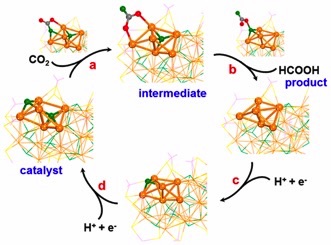
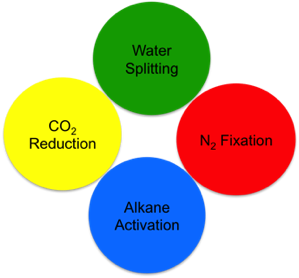
CO2 reduction on a Cu cluster
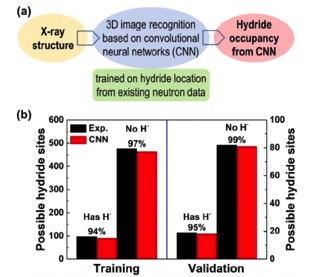
Deep learning of hydride locations
Materials for gas separation
Important for chemical industry
Sorbents and membranes are most commonly used
We study local interaction of gas and separation media with quantum chemistry
We model solubility and diffusivity with molecular simulations including Monte Carlo and molecular dynamics
❖
❖
❖
❖
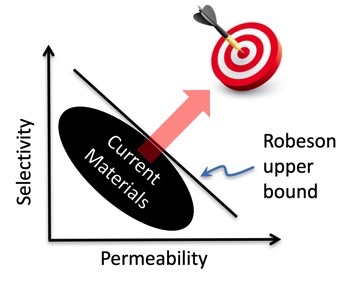
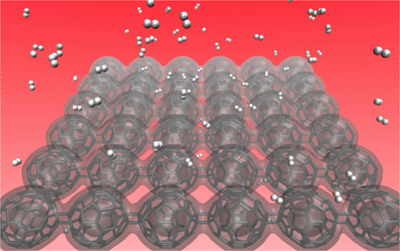
Monolayer fullerene membranes (doi)
Ligand design and molecular simulations for rare-earth separations
Important for critical materials needs
Coordination chemistry, solvation, and interfacial phenomena
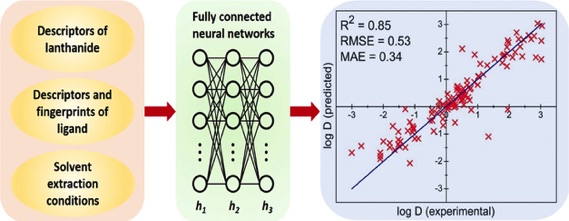
Data-driven predictive modeling of distribution ratios and separation factors via machine learning
❖
❖
❖
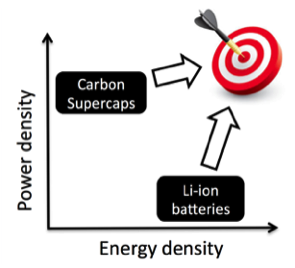
Electric energy storage
Broad applications in transportation, electronics, and robotics
We work on anion-storage batteries, composite cathode materials, and advanced electroyltes
We use DFT and machine-learning potentials to study the charging behaviors of different cathode materials including oxides and lithium-salt composites as well as ion transport
❖
❖
❖

❖
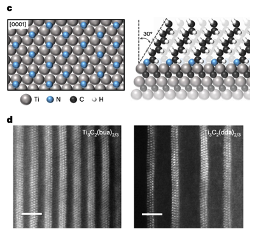
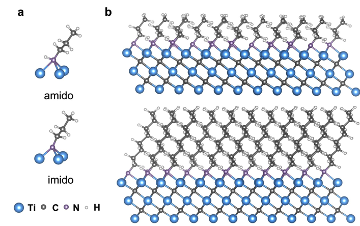
Computional interfaces: Understanding the organic-inorganic interfaces and functionalization for MXenes and other 2D materials

Li-ion transport in LiTaCl6 via machine-learning force-field molecular dynamics simulations (doi)

Amine-derived ligands on MXene surfaces (doi)